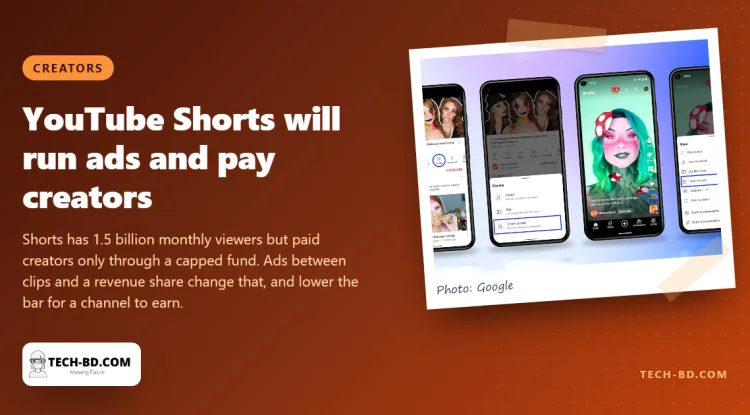
YouTube has spent three years turning Shorts, its 60-second answer to TikTok, into a product that behaves like the rest of YouTube. This week two more pieces arrived. Picture-in-picture, which has let a normal video shrink into a floating corner window while you reply to a message, now works for Shorts too. And Smart Downloads, the feature that quietly saves a selection of videos to your phone for offline viewing, now saves Shorts as well. Both, YouTube says, come first to Premium subscribers.
How the two features work
Picture-in-picture starts when you leave the app while a Short is playing: the video shrinks to a small window over whatever app you open next, keeps playing, and can be dragged around or dismissed. The feed does not advance; it is the one Short, looping. Smart Downloads is fully automatic once switched on — over Wi-Fi the app picks Shorts it thinks you will like, stores them, and shows them in the Downloads tab, so a train ride with no signal still has something to swipe through. Old downloads are cleared as new ones arrive.
Why YouTube keeps investing in Shorts
Because Shorts is where the growth is. YouTube said this year that one creator in four now earns money from Shorts, and the format is the entry point for the youngest users, who arrive from TikTok and Instagram Reels and expect the same conveniences. Every feature that makes Shorts sticky — background play, offline caches — keeps a viewer inside YouTube for the long videos where the real advertising money is.
The Premium gate
Premium is the catch. In the United States roughly one YouTube user in ten pays for it; in Bangladesh, where the subscription is priced in taka but still costs more than a month of mobile data, the number is a rounding error. Picture-in-picture for ordinary videos took two years to trickle from Premium to everyone in the US and still requires Premium in most other countries, including this one. Smart Downloads has always been Premium-only. So for most Bangladeshi viewers these two features are an announcement, not an update. The free-tier alternative remains what it has always been: Android’s own split-screen mode, which keeps YouTube visible above another app and works for Shorts today.
How Shorts actually pays, and why that matters here
The Premium gate makes more sense once you know how Shorts money works, because it is unlike the rest of YouTube.
A long video earns from the ads on that video, and the creator takes 55 per cent. Shorts does not work that way: ads shown between Shorts go into a single pool; the music licensing bill is settled out of it before anything else, and creators then split what is left in proportion to their share of all Shorts views, taking 45 per cent of it. Two consequences follow — your earnings depend on what everyone else uploaded that month, and using popular music reduces the pool before anyone is paid.
Because the pool is filled by advertisers paying per market, a million Shorts views in Bangladesh is worth a small fraction of a million in the United States. That is not a judgement about the audience; it is the price of advertising here.
What Premium has to do with it
Premium changes the arithmetic in a way worth knowing: a Premium subscriber sees no ads, so YouTube pays creators out of subscription revenue instead, at a rate that is generally better per view than the ad pool. A country with few Premium subscribers earns less per view for structural reasons, and features that arrive for Premium first are an attempt to change that — which is also why they arrive last in the countries that need the revenue most.
Source: TechCrunch, via Prothom Alo.